

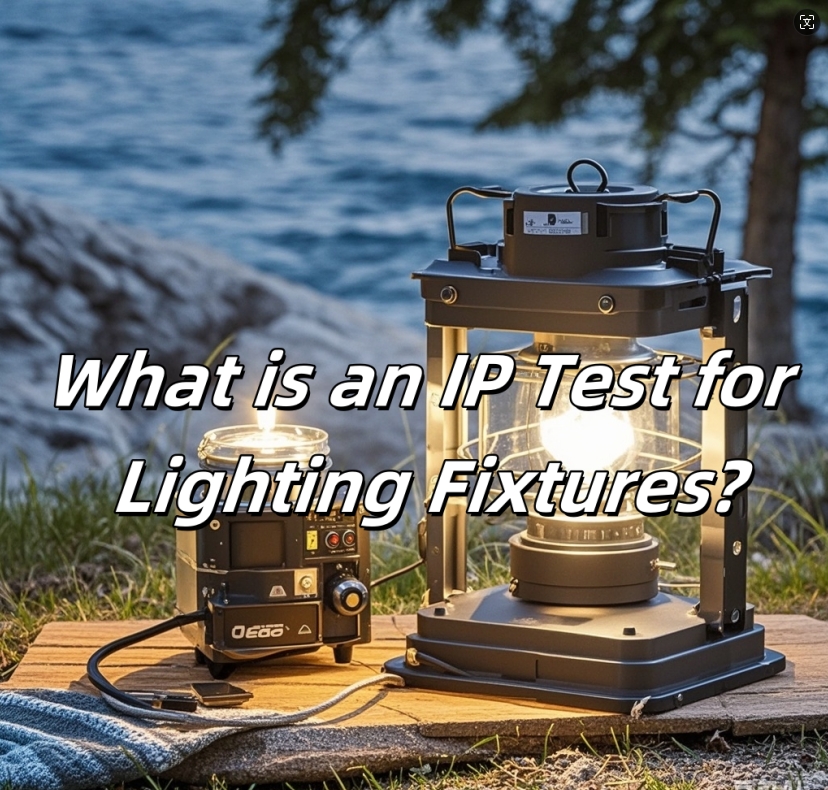
An IP (Ingress Protection) test measures the ability of a lighting fixture to resist the intrusion of foreign objects and moisture. This process is used to determine the level of protection the fixture offers against these elements. The results of such tests are typically expressed as an IP rating.
Why is IP Testing for Lighting Fixtures Important?
1. Safety: Improper moisture sealing in lighting fixtures can create safety hazards. Moisture can lead to electric shock and short circuits, potentially causing fires or other accidents.
2. Performance: Poorly sealed lighting fixtures can also degrade performance and efficiency, affecting their overall effectiveness and lifespan.
3. Compliance: Industry standards and regulations often require compliance. Adhering to these standards is crucial to ensure the safety and effectiveness of lighting fixtures.
Steps to Conduct IP Testing for Lighting Fixtures
The testing is conducted according to the national standard GB/T 4208-2017 "Degrees of Protection Provided by Enclosures (IP Code)."
1. Review Specifications: Before conducting the test, review the specifications of the lighting fixture to determine the required IP protection level.
2. Prepare Testing Equipment: Prepare the testing equipment according to applicable standards and regulations.
3. Conduct the Test: The test involves exposing the lighting fixture to water, dust, and other foreign objects to determine its resistance to these intrusions. The duration and intensity of the test depend on the required protection level.
4. Interpret the Results: After completing the test, interpret the results to determine the fixture's IP rating. This rating will indicate the level of protection the fixture offers against foreign objects and moisture.
5. Document the Results: Record the results for future reference. This information can be used to demonstrate compliance with industry standards and regulations.
Dust Test
In the dust test, the lighting fixture is placed in a specific dust-proof test chamber, simulating different environmental conditions through various dust concentrations and airflow speeds. After a set period of testing, the fixture is inspected to determine whether any dust has infiltrated the interior.
Water Test
In the water test, different spray devices and water pressures are used to conduct a spray test on the fixture. For example, for an IPX5 rating, the fixture must be sprayed with a nozzle having a diameter of 6.3mm, from a distance of 2.5 to 3 meters, with a flow rate of 12.5 liters per minute, for a duration of no less than 3 minutes. During the test, the fixture is observed for any signs of water leakage.