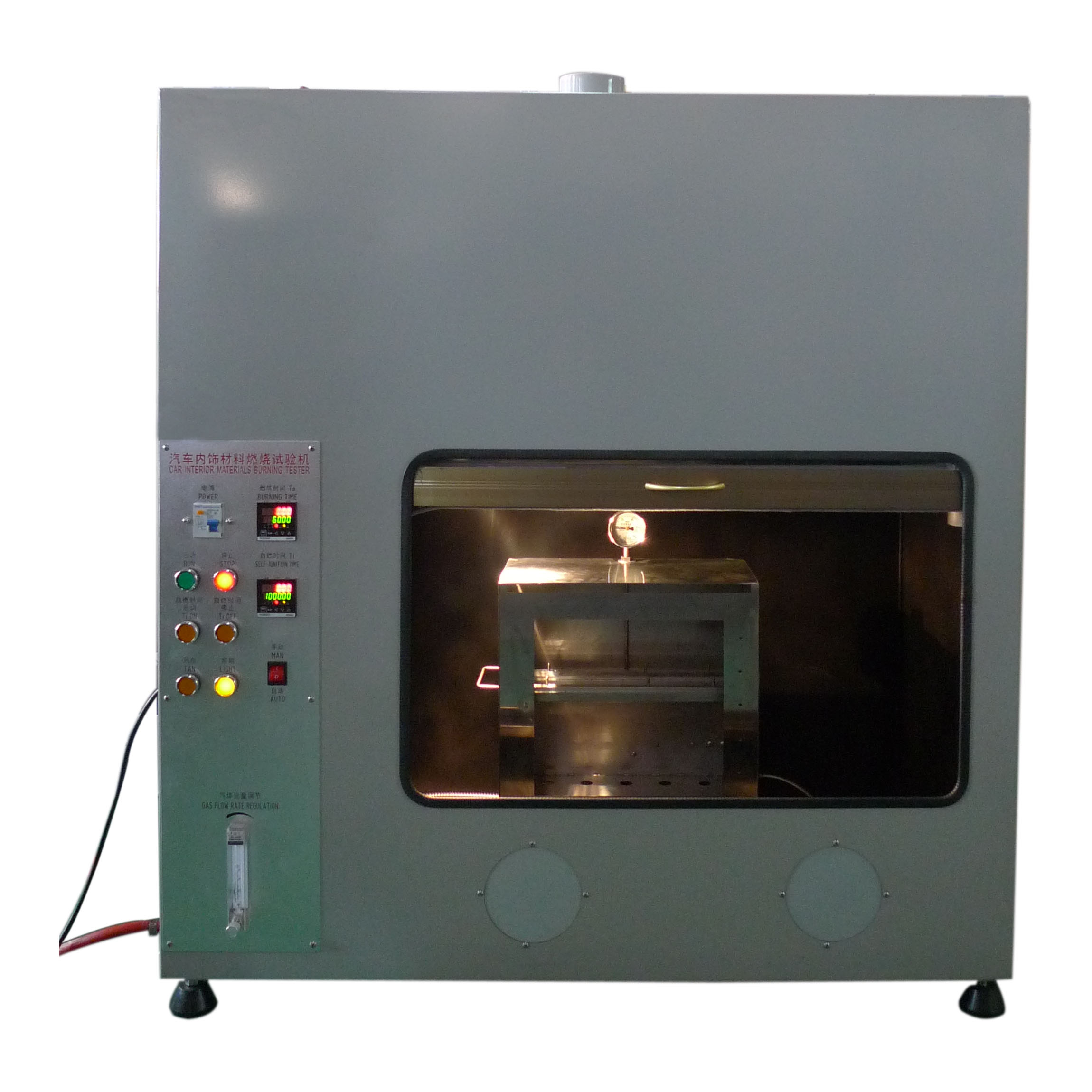
Flammability Test Apparatus, Burning Tests
Flammability Tests: Comprehensive Fire Safety Assessment Tools
Automotive interior combustion testing instruments are widely used in the automotive industry. Major car manufacturers and interior suppliers use these instruments to test and evaluate the fire resistance of their products.
By using these instruments, the combustion characteristics of materials can be better understood, ensuring optimal safety in the event of a fire.
Testing Standards and Requirements
Different countries and regions have corresponding standards and requirements for the combustion and flammability testing of automotive interior materials.
Compliance Standards:
1. Chinese Standard GB8410-2006 (Combustion Characteristics of Automotive Interior Materials)
2. International Standard ISO 3795 (Road Vehicles—Determination of Burning Behaviour of Interior Materials)
3. EU Standard 95/28/EC Annex IV (Test for Horizontal Burning Rate of Materials Used in the Interior Construction of Certain Categories of Motor Vehicles)
4. U.S. Standard SAE J 369 a
5. U.S. Standard FMVSS 571.302
6. Japanese Standard JIS D1201
7. German Standard DIN 75200
8. Volkswagen Standard TL-VW 1010
9. French Standard NF R18-501
10. Korean Standard MS 300-08
11. Mercedes-Benz Standard DBL 5310
12. BMW Standard GS97038
The purpose of this test is to determine the combustion characteristics of materials when exposed to flame, and to measure parameters such as burning rate, flame spread path, and smoke production. These parameters help assess the fire resistance of materials, enabling the design of safer automotive interiors.
Automobile interior combustion test instrument manufactured by YUWEI.
Structure and Functionality:
l Components:
1. Control box
2. Combustion chamber
3. Burner
4. Solenoid valve (flowmeter)
5. High-voltage igniter
6. Thermometer
7. Signal control lines
8. Upper and lower sample holders
9. Optional ventilation hood
l Materials and Appearance:
1. Control box and combustion chamber are made of stainless steel, ensuring easy cleaning, maintenance, aesthetic appeal, and resistance to smoke and gas corrosion.
2. The main combustion chamber is also stainless steel, significantly extending the instrument's lifespan.
l Automation Features:
1. Automatic ignition
2. Automatic gas supply
3. Automatic timing
4. Automatic test conclusion
l High-Reliability Ignition:
1. Ensures flame stability.
l Timing Functions:
1. The combustion time timer can automatically reset.
l Safety Design:
1. Electrical and gas systems are housed separately, enhancing operational safety.
2. The combustion chamber has a fireproof glass door for safety.
3. The LPG tank is mounted on a base rack, allowing easy access during tests.
4. The gas safety system features leak detection, alarms, and automatic gas shut-off.
l Environmental Protection:
1. The integrated design of the environmental protection chamber fully complies with national standards for test environment volume.
2. The chamber interior is coated with a special heat-resistant, non-stick paint, facilitating cleaning.
l Exhaust System:
1. The slow flow device gently releases hot gases and smoke generated during combustion tests, ensuring stability.
2. A high-power exhaust fan rapidly expels smoke after the test.
l Sealing:
1. Excellent sealing properties prevent smoke and harmful gases from escaping during tests, protecting operators.
l Wind Speed Control:
1. The wind speed adjustment system can automatically control wind speed in real-time, ensuring it remains within national standard requirements throughout the test, ensuring test consistency and compliance.
l Real-Time Display:
1. Continuous display of combustion chamber temperature.
l Observation Window:
1. Wide-view heat-resistant glass window for easy observation during tests.
l Complete Accessories:
1. All necessary accessories for standard horizontal combustion tests of automotive interior materials are included.