

The Insulation Resistance Test
WHY?
Safe insulation is essential for ensuring electrical safety. It prevents users from touching live conductors and stops short circuits from occurring between conductors or to the equipment’s housing. If a short circuit does happen, it could lead to a life-threatening current flowing through the user if they touch the housing. The protective earth conductor is supposed to prevent this, but it could fail, and even then, it only mitigates the effect, not the cause.
To avoid these risks, insulation must be flawless. You must confirm and document this by conducting an insulation resistance test before the electrical product is released. This test is mandatory for every unit—meaning that every single electrical product you put on the market must pass an insulation resistance test.
WHERE?
It's a bit more complex than with the protective earth conductor, for example. Essentially, there must be good insulation between current-carrying conductors or between these conductors and housing parts. Typically, this is achieved by insulating the electrical conductors to prevent dangerous contact, meaning they are covered with an insulating material. However, this protective sheath must be removed when the electrical conductor is connected to other electrical components. At these points, insulation is maintained by ensuring a safe distance. Here, safety is ensured through clearance and creepage distances.
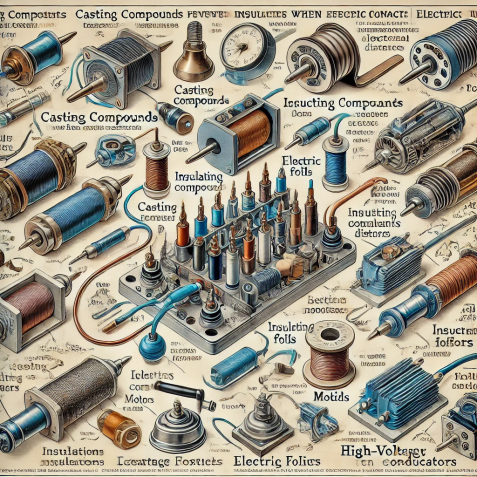
Additionally, current-carrying conductors can be insulated from each other using methods like casting compounds, insulating foils, or solid materials.
When is each type of insulation used? This depends on the design of the electrical product and specific requirements, such as high temperature or mechanical stress.
It becomes clear that the insulation requirements and designs in a luminaire, an electric iron, an electric motor, or a high-voltage insulator in a power station are vastly different. This diversity leads to quite complex electrotechnical insulation structures in each case.
HOW?
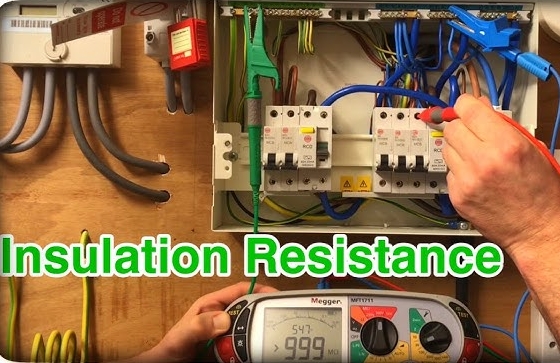
Since insulation is related to voltage, the insulation resistance test is conducted using a defined test voltage level. This voltage can either be gradually increased or applied directly at its full magnitude to the device being tested.
The purpose of the test is to measure the current and then calculate the insulation resistance, which is the key criterion for evaluating the insulation's effectiveness. The insulation resistance must meet or exceed a specified minimum value.
The minimum required insulation resistance can vary depending on the product and region.
Therefore, it's essential to follow the testing parameters specified in the relevant standards for the product and region.